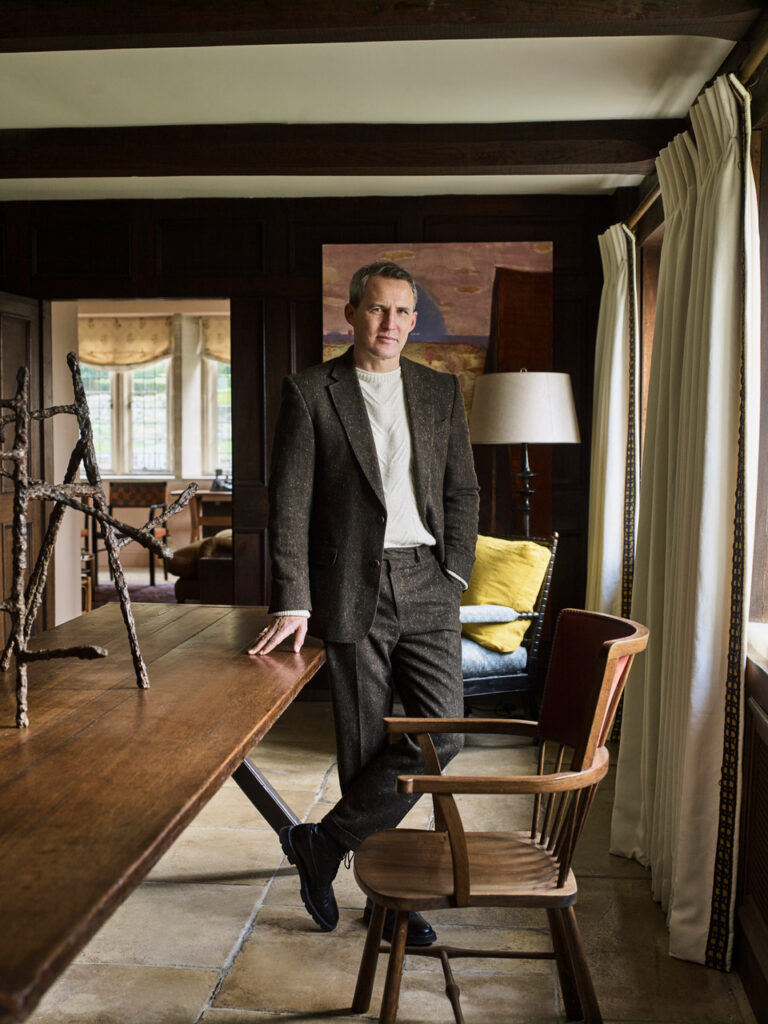
James Mackie on Collecting, Antiques & Interiors
Having spent more than two decades at Sotheby’s and Bonhams before founding his eponymous interiors practice in 2020, James Mackie brings a deeply informed collector’s eye to decoration. A House & Garden Top 100 Interior Designer who has also served on the LAPADA Fair Excellence Committee, James reflects on how a life immersed in art and antiques continues to shape his approach to interiors, from composition and collecting to the transformative role of lighting. We also discuss the enduring value of antiques today, the pieces we live with for a lifetime, and the new generation bringing fresh energy to the world of collecting and design..
You spent over two decades at Sotheby’s and Bonhams before setting up J. James Mackie in 2020. Most designers come to art and antiques from interiors – you came to interiors from art & antiques. How much does that inform your practice?
Working at Sotheby’s with its calendar of sales across every category in the fine and decorative arts is rather like working at Tate Modern, the National Gallery and the V&A all rolled into one. The expertise of colleagues and the items entrusted to them to sell was extraordinary and I absorbed a huge amount from looking and listening on everything from 18th century furniture to modern British paintings. As a specialist in Impressionist & Modern Art I lived composition and colour which literally informs my work as a designer every day, be it arranging a room or putting together a scheme of colour and pattern.
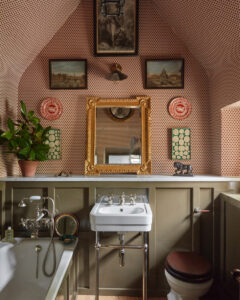
Is there a single element of a room that you think people chronically underestimate, something that transforms a space but rarely gets the attention it deserves?
Lighting is often not considered enough, yet it is utterly transformational in the effect it creates in terms of atmosphere and is essential in enabling a room to fulfill the functional requirements of it. It is no exaggeration to say that lighting can make or break a room so in my work I spend a great deal of time establishing lighting plans and sourcing beautiful and room enhancing fittings and lamps.
Is there a piece you’ve lived with for many years that you would never part with? What gives it that permanence?
I couldn’t part with a small early 19th century lacquer box that belonged to my grandmother and that lived on her dressing table. I remember it well as a child and now it has great sentimental value as a memory of her and also her beautiful house. If you were to look closely you would see that it appears in all the photoshoots of my work as a designer. I suppose it has become something of a talisman.
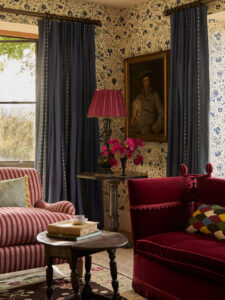
Are there periods or categories in the art or antiques market that you feel are undervalued right now, things that a collector should be paying attention to?
I believe antiques across the board represent superb value for money so in that sense they are undervalued. I’m excited though to see a new generation of dealers and designers emerging who are invigorating the world of antiques. In addition to their eye and expertise they also have a keen understanding of how to market their inventory, hopefully attracting new audiences. Perhaps we should be buying now while we can!
Your home is clearly a reflection of a life spent looking seriously at beautiful things. Is there something you’d call a collection, and if so, how did it begin?
I began my career at Bonhams where I trained as a specialist in Modern and Contemporary prints by the great artists of the 19th and 20th century. I started a small collection then of prints by British artists that ranges from works by William Hogarth to David Hockney and which I continue to edit and to add to. The focus of the collection is quite tight and I have enjoyed exploring in depth particular schools such as the English Romantics who were working in the first part of the 19th century to pieces from the 1950s by the artists collectively known as the School of London. It’s a modest group of pieces but they give me a great deal of pleasure.