Objects of Desire: Chinoiserie in Georgian Britain
By the early eighteenth century, Chinese art and design had become a source of fascination across Europe. Imported porcelain, lacquerware and textiles arrived in unprecedented quantities, bringing with them motifs, materials and techniques unlike anything European craftsmen had encountered before.
Yet Chinoiserie was never simply a matter of copying Chinese design. Instead, it emerged from a creative dialogue between East and West. Chinese workshops produced objects specifically for European patrons, while European designers adapted Chinese motifs to suit local tastes. The result was a new decorative language that blended Chinese craftsmanship with Georgian ideas of comfort, luxury and display.
The three objects below, currently offered by LAPADA exhibitors, illustrate different facets of this cultural exchange and help explain why Chinoiserie became one of the defining styles of the Georgian interior.
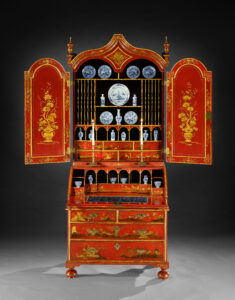
George I Period Scarlet and Gilt Japanned Bureau Cabinet, c. 1720, Godson & Coles and De Jong Fine English Furniture
A Cabinet Inspired by China
While imported Chinese lacquer furniture was highly prized in eighteenth-century Britain, few collectors could acquire the real thing. Instead, British craftsmen developed their own interpretation through the art of japanning, creating furniture inspired by Chinese lacquerwork using European materials and techniques. This George I scarlet and gilt japanned cabinet from Godson & Coles and De Jong Fine English Furniture is a striking example of the fashion. Decorated with gilded figures, landscapes and pavilions against a vibrant scarlet ground, it reflects the way Chinese motifs were adapted to suit Georgian tastes, becoming part of a distinctly European decorative style known as Chinoiserie.
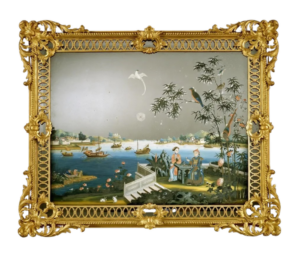
A George III Chinese Export Mirror Painting, Ronald Phillips
Chinese Export Paintings
Alongside lacquerware and porcelain, Chinese export paintings became highly sought-after additions to fashionable eighteenth-century interiors. This reverse-glass mirror painting, offered by Ronald Phillips and dating to around 1760, would have captivated contemporary audiences with both its subject matter and its technique. Painted on the reverse of a glass panel, the work possesses a distinctive luminosity that gives it an almost jewel-like quality. For Georgian collectors, such pieces offered not only decoration, but also a sense of curiosity and discovery, bringing something unfamiliar and intriguing into the home.
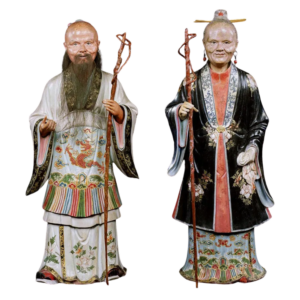
A pair of George III Chinese Export Figures, Ronald Phillips
Objects of Curiosity and Display
The fascination with China extended to every corner of the Georgian interior. These Chinese export figures, offered by Ronald Phillips and dating from the Qianlong period, were intended to delight and intrigue. Displayed on mantelpieces, cabinets and tables alongside porcelain and lacquerware, such objects reflected a growing appetite for the exotic and unfamiliar. For Georgian collectors, they were more than decorative ornaments; they were conversation pieces that signalled taste, refinement and an awareness of the wider world.
An Enduring Style
The appeal of Chinoiserie lies in its ability to blend influences, traditions and techniques into something distinctive and original. Whether through furniture inspired by Chinese lacquer, paintings created for the export market or decorative objects designed to delight and intrigue, these works reflect a period when Britain looked outward with curiosity and imagination. Nearly three centuries later, collectors continue to be drawn to these objects not only for their beauty, but also for the rich history of cultural exchange they represent.